
Vintage Opal Wedding Ring: A Romantic Alternative to Traditional Bridal Jewelry
Vintage Opal Wedding Ring: A Romantic Alternative to Traditional Bridal Jewelry
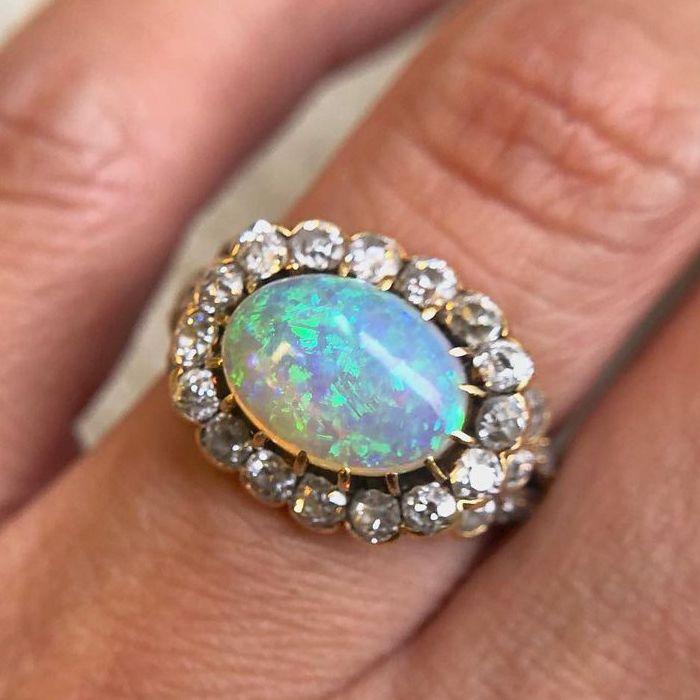
A vintage opal wedding ring has a softer, more individual character than a conventional diamond band. Its beauty comes from play of color—the flashes of blue, green, pink, gold or red that appear as the stone moves under light.
Since every opal has a different color pattern, no two rings look quite the same. Add an antique-style setting, engraved band or milgrain edge, and the result feels personal rather than mass-produced. It is an appealing choice for brides who want their wedding jewelry to carry both color and old-world charm.
What Defines a Vintage Opal Wedding Ring?
“Vintage” can describe a genuine ring from an earlier period, but it is also widely used for new jewelry influenced by Victorian, Edwardian, Art Nouveau or Art Deco design.
Typical details include:
- Fine milgrain borders
- Floral and leaf-shaped settings
- Hand-engraved bands
- Delicate filigree metalwork
- Diamond or gemstone halos
- Symmetrical Art Deco patterns
- Warm yellow gold or romantic rose gold
The most convincing designs allow these details to frame the opal without hiding it. Opal already has plenty of visual movement, so an overly busy setting can compete with the stone rather than enhance it.
The Meaning of Opal in a Wedding Ring
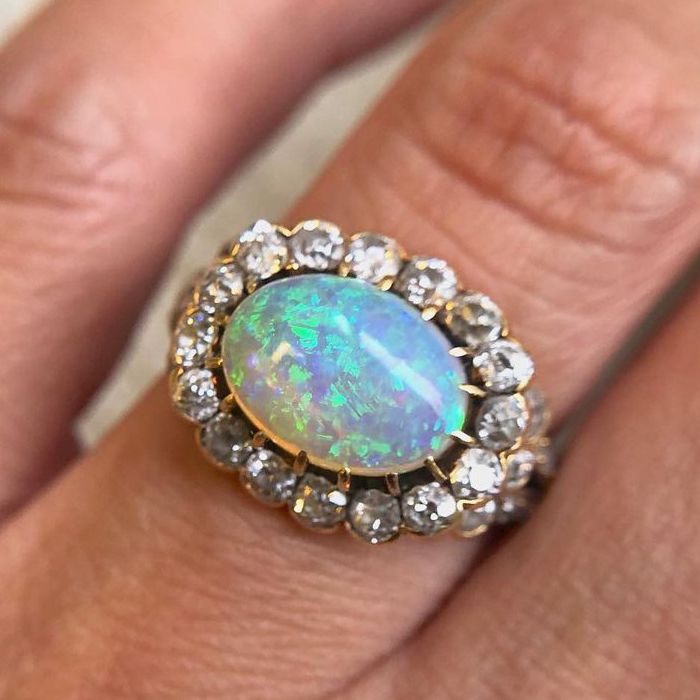
Opal has long been connected with hope, creativity, passion and emotional expression. Its changing colors can also represent the many stages and moods of a lasting relationship.
For a wedding ring, this symbolism feels especially appropriate. The stone never appears exactly the same from every angle, yet it remains recognizably itself. Many couples appreciate that sense of individuality and change.
The antique influence adds another layer of meaning. Vintage-inspired jewelry often suggests continuity, craftsmanship and a love that is intended to last beyond passing trends.
Popular Opal Cuts and Their Characteristics
Unlike diamonds, opals are rarely covered in sharp facets. Most are shaped into polished cabochons with smooth, rounded surfaces. This cutting style protects the stone and provides a broad area where its colors can be seen.
Each shape creates a different impression on the hand.
Oval-Cut Opal
The oval cabochon is a natural fit for vintage jewelry. Its elongated shape can make the finger appear more slender, while the wide surface shows off the opal’s changing colors.
Oval opals pair especially well with Victorian floral halos, engraved shoulders and delicate claw settings. This is one of the most versatile choices for a vintage opal wedding ring.
Round-Cut Opal
Round opals have a neat, balanced look. They suit symmetrical halos, small cluster rings and classic solitaire settings.
A round stone can feel understated when worn alone or more decorative when surrounded by seed pearls, diamonds or colored gemstones. It is a good option for someone who likes antique detail without an overly dramatic shape.
Pear-Shaped Opal
A pear-shaped opal combines a curved base with a tapered point. The outline has a graceful, slightly unconventional look that works beautifully in floral and nature-inspired rings.
The pointed tip needs protection, particularly if the ring will be worn every day. A well-positioned prong or partial bezel can help guard this vulnerable area.
Marquise-Cut Opal
Long and narrow with pointed ends, a marquise opal immediately draws the eye along the finger. The shape has a strong period feel and often appears in Art Nouveau designs.
Marquise opals can make a smaller stone look more prominent. However, both tips should be securely protected to reduce the risk of chipping.
Cushion-Cut Opal
A cushion opal has a square or rectangular outline with rounded corners. It brings gentle structure to the ring and sits comfortably between classic and geometric design.
This cut works particularly well in Art Deco settings, where straight lines, milgrain borders and small accent stones create a polished frame around the opal.
Freeform Opal
Freeform cutting follows the natural outline or strongest color areas of the rough stone. The finished gem may be asymmetrical, but that is part of its appeal.
A freeform opal ring feels less formal and more artistic. It is well suited to a handcrafted setting and to anyone who values individuality over perfect symmetry.
How to Judge an Opal’s Color
Opal cannot be judged by carat weight alone. The quality and appeal of the stone depend heavily on its brightness, color range and pattern.
When viewing an opal, consider:
- How clearly the colors appear
- Whether the color is visible from several angles
- How the pattern is distributed across the surface
- Whether the stone has visible cracks or deep scratches
- How its body color works with the chosen metal
White opal tends to have a pale, luminous background and a gentle bridal look. Black opal uses a darker body tone to create stronger color contrast. Fire opal is recognized by warm yellow, orange or reddish tones, sometimes with additional play of color.
Look at the ring in daylight as well as indoor lighting. An opal that looks lively in different conditions will usually be more enjoyable to wear.
Choosing a Setting for Beauty and Protection
Opal is softer than diamond, sapphire and ruby, so the setting is more than a decorative choice.
A bezel setting surrounds most or all of the gem’s edge, offering better protection against everyday knocks. A prong setting exposes more of the stone and allows more light around it, but the prongs should be inspected periodically.
Low-profile settings are often more practical for daily wear because they are less likely to catch on clothing. Raised halos and elaborate filigree can look beautiful, though they may need more careful handling.
Metal color also changes the mood of the ring. Yellow gold emphasizes warm flashes, rose gold complements pink and orange tones, and white gold creates a cool contrast with blue or green play of color.
Can You Wear an Opal Wedding Ring Every Day?
Yes, but it should be worn thoughtfully. Opal measures around 5.5 to 6.5 on the Mohs hardness scale, making it more vulnerable to scratches and impact than many traditional bridal gemstones.
Remove the ring before:
- Cleaning with household chemicals
- Gardening or lifting heavy objects
- Exercising or playing sports
- Swimming in chlorinated water
- Using steam or ultrasonic jewelry cleaners
For routine care, wipe the ring with a soft, damp cloth. If it needs a deeper clean, use lukewarm water and a small amount of mild soap. Avoid sudden temperature changes and harsh cleaning products.
How to Choose the Right Vintage Opal Wedding Ring
Start with the color rather than the size. A smaller opal with vivid, well-distributed flashes can be far more striking than a larger stone with weak color.
Next, consider how the ring will be worn. Someone with an active lifestyle may prefer a smooth bezel and a lower setting. A bride who wears jewelry mainly for special occasions may be comfortable with finer filigree, a raised center stone or a more elaborate halo.
If the opal ring will sit beside another wedding band, check the fit carefully. The neighboring ring should not rub against the opal or its setting.
When shopping online, clear photographs, practical return terms and reliable delivery matter. Next Necklace offers Free Shipping and a 30-Day Return, allowing customers to examine the ring’s color, proportions and fit before making a final decision.
A Ring with Its Own Story
A vintage opal wedding ring does not depend on perfect uniformity. Its attraction lies in natural color variation, thoughtful craftsmanship and design details that feel collected over time.
From a traditional oval cabochon to an artistic freeform stone, the right cut should bring out the opal’s strongest colors while fitting comfortably into the setting. With sensible care, an opal ring can become a meaningful part of everyday life—a wedding jewel that feels distinctive from the first day and gains even more character with time.
 SIMILAR STORIES
-
What Is a Garnet Birthstone Bracelet for Women and What Does It Mean?
Read story -
Art Deco Jewelry for Women: Timeless Glamour with a Modern Edge
Read story -
Tennis Necklace vs Pendant Necklace: Which Style Is Right for You?
Read story -
Which Green Gemstone Necklace for Women Is Right for You in 2026?
Read story -
What Do Ruby Earrings Symbolize? Love, Power & Protection Uncovered
Read story -
The Pink Sapphire Drop Earrings Guide: Elegance, Style, and Sparkle
Read story -
Is an Aquamarine Jewelry Set for Wedding Wear Right for Your Bridal Look?
Read story -
Blue Sapphire Necklace for Women: Elegant Styles and Color Ideas
Read story -
Amethyst Pendant Necklace for Women: A Little Purple Goes a Long Way
Read story -
Best Yellow Topaz Pendant Necklaces for Women in 2026
Read story -
Emerald Necklace for Women: The Green Gem That Always Stands Out
Read story -
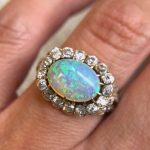
Vintage Opal Wedding Ring: A Romantic Alternative to Traditional Bridal Jewelry
Read story -
Green Earrings for Women: A Fresh Pop of Color for Any Outfit
Read story -
Emerald Green Necklace: The Color That Makes an Outfit Feel Complete
Read story -
Pink Sapphire Stud Earrings: A Fresh Take on Everyday Color
Read story